Adult Athletes Need Better Readiness Support
In short
Adult athletes, from college to pro and masters, carry real mental health strain, and many still do not feel safe raising it with a coach. Support falls short because sport rewards playing hurt, the money at stake punishes stepping back, and screening happens too rarely. Short, private, frequent check-ins give athletes and staff time to act before a crisis.
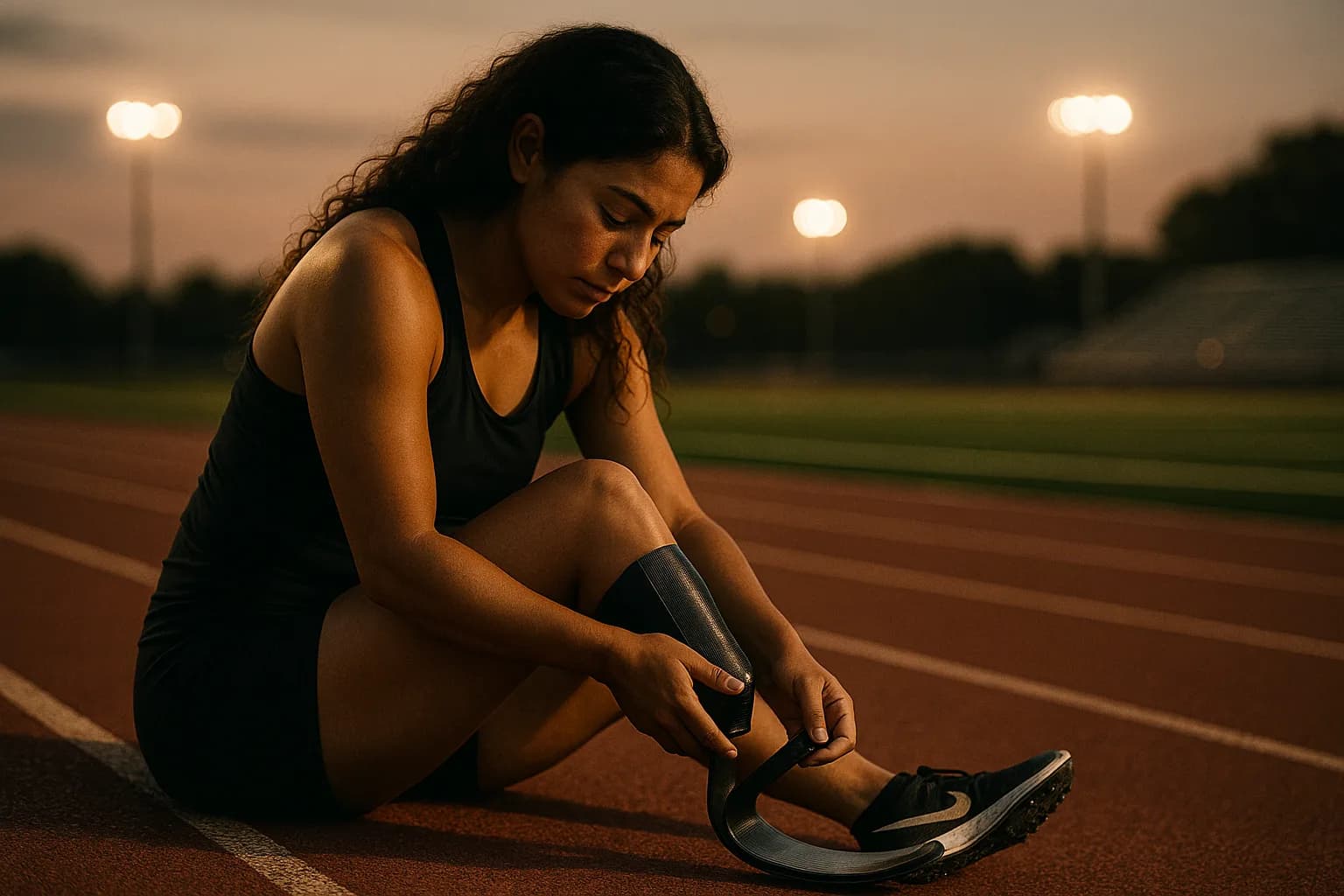
Adult athletes do not get enough mental health support because sport teaches them to play hurt, the money riding on a season punishes anyone who steps back, and most screening happens once a year on a questionnaire. The data on college and former elite athletes shows the cost of that gap. What helps is earlier, more frequent and private contact, so an athlete and the staff around them can see a change while there is still time to act.
How common are mental health problems in adult athletes?
They are common, and the most serious outcome is rising. In an NCAA survey of more than 23,000 student-athletes run from September 2022 to June 2023, 44% of athletes in women's sports said they felt constantly overwhelmed and 35% reported mental exhaustion. In men's sports the figures were 17% and 16%. Both groups improved on the 2020 and 2021 surveys, but the drop for women was small, from 47% to 44% for feeling overwhelmed.
The hardest number comes from a 20-year study of NCAA athlete deaths published in the British Journal of Sports Medicine in April 2024. Of 1,102 athletes who died between July 2002 and June 2022, 128 (11.5%) died by suicide. The share of deaths from suicide went from just over 7.5% in the first ten years to just over 15% in the second. Suicide is now the second most common cause of death in this group, after accidents. The authors relied on third-party reports because no mandatory reporting system exists, so the true number may be higher.
The strain does not end with the last game. A 2024 meta-analysis of former elite athletes in BMJ Open Sport & Exercise Medicine found the prevalence of anxiety was about 2.1 times, and depression about 2.6 times, that of the general population. Former American football players and jockeys had the highest rates.
Masters athletes train under the same identity pressure, usually on top of a job and a family, and they rarely have a team physician or a sports psychologist down the hall.
Why do athletes hide mental health problems?
Most athletes hide it because they expect it to cost them playing time, a contract or respect. The same NCAA survey found only 40% of athletes in women's sports and 54% in men's sports felt comfortable talking to their coaches about mental health. Those figures were 9 and 8 points lower than before the pandemic. About half said they would feel comfortable seeking help from a licensed mental health provider on campus.
The public cases show why. At the 2021 French Open, Naomi Osaka skipped post-match press conferences, saying they gave her "huge waves of anxiety". Officials fined her $15,000, and the four Grand Slams warned her she could face disqualification. She withdrew from the tournament. Two months later at the Tokyo Olympics, Simone Biles pulled out of the team final and said she had to focus on her mental health. Both took heavy public criticism for it.
The habit starts long before college. Many athletes learn as kids that being hurt and being injured are different things, and that the good ones play hurt. Each season they push that line a little further. It is one reason so many retire with long-term physical injuries, and one reason the mental cost of a career often shows up only when it stops.
How does money pressure affect athletes' mental health?
Money raises the stakes of every bad week. In the US it starts with youth sport. A 2024 Aspen Institute Project Play survey of 1,848 parents found families spent an average of $1,016 on a child's primary sport, up 46% since 2019. Registration, travel and private coaching drove most of the rise.
By the time an athlete reaches college or a first pro contract, a family has often spent years and real savings on the bet. A scholarship pays for a degree. A contract can support parents and siblings. That turns an injury, a slump or a request for time off into a family money question. One athlete Okaya spoke with said that after tearing his ACL again, his first worry was whether his parents could afford the medical bills.
An athlete under that kind of pressure has every reason to write "I'm fine" on a form.
Why does once-a-year screening miss so much?
A yearly questionnaire captures one day, and it only captures what the athlete chooses to report. Tools like the PHQ-9 are useful and well studied, but they depend on honest self-report. Some athletes answer truthfully. Some know the result could affect their place on the team. Some are already struggling enough that the questions are hard to answer.
Timing is the second problem. A preseason screen in August says little about an athlete in February after an injury, a breakup or a lost starting spot. By the time a problem is obvious to a coach, it has usually been building for weeks.
Athletes and staff already measure training load, sleep and recovery several times a week. Readiness to perform deserves the same rhythm, with the athlete in control of their own results.
What helps athletes and staff see changes earlier?
Frequent, private, short contact helps most, with a clear path to a professional when it is needed. In practice that means four things:
- Ask often. A check-in every few days shows a trend across a season, which a preseason form cannot.
- Compare each athlete with their own normal. A change from an athlete's usual is the signal, whatever their usual looks like.
- Keep individual answers with the athlete. If athletes think a coach reads their answers, they stop giving honest ones.
- Name the next step. Every athlete should know who to call, whether that is a team physician, a sports psychologist or a counselor.
Okaya is one way to do this. It is a short, private check-in for adults 18 and over. You talk with Sanora, Okaya's AI guide, for about 3 minutes. It compares how you sound, what you say and how your expression moves today with your own earlier check-ins. It uses points from your face, not a video of you. Individual results stay private to the individual. Leadership sees anonymized, aggregated unit-level readiness only. Okaya is not a medical device, and it works alongside the mental health professionals on a team's staff.
US distance runner Alia Gray described what is at stake for performance:
"As you mature as a competitive athlete, you begin to realize just how important the mental approach to training and competing is. At a certain level of competition, willingness to work hard and talent are mere table stakes: the true champions set themselves apart by their ability to hone mental acumen, identify burnout early, and maintain focus in times of high stress or pressure."
Key points
- In a 2022-23 NCAA survey, 44% of athletes in women's sports felt constantly overwhelmed, and fewer than half felt comfortable raising mental health with a coach.
- Suicide's share of NCAA athlete deaths roughly doubled over 20 years, and it is now the second most common cause of death in that group.
- Former elite athletes show more than twice the general population's prevalence of anxiety and depression.
- Stigma and money pressure push athletes to under-report on yearly forms.
- Short, frequent, private check-ins against each athlete's own normal give staff time to act.
Where should a coaching staff start?
Start with the conversation that already happens about injuries. Put readiness on the same weekly agenda as training load, and make sure every athlete knows who on staff they can talk to without it reaching the depth chart. Ask more often than once a year. Keep individual answers with the athlete, and use team trends to decide when to bring in a professional.
If an athlete is in crisis in the US, they can call or text 988 to reach the Suicide and Crisis Lifeline at any hour.
For a short, private readiness check-in built for adults, see Okaya.