Can Users Game a Readiness Check-In? How Okaya Limits It
In short
A person can try to fake a readiness check-in, and no check-in can stop someone who is set on it. Okaya compares each person with their own earlier check-ins across voice, words and expression, which makes a steady act hard to keep up. Individual results stay private to the individual, so there is little reason to fake in the first place.
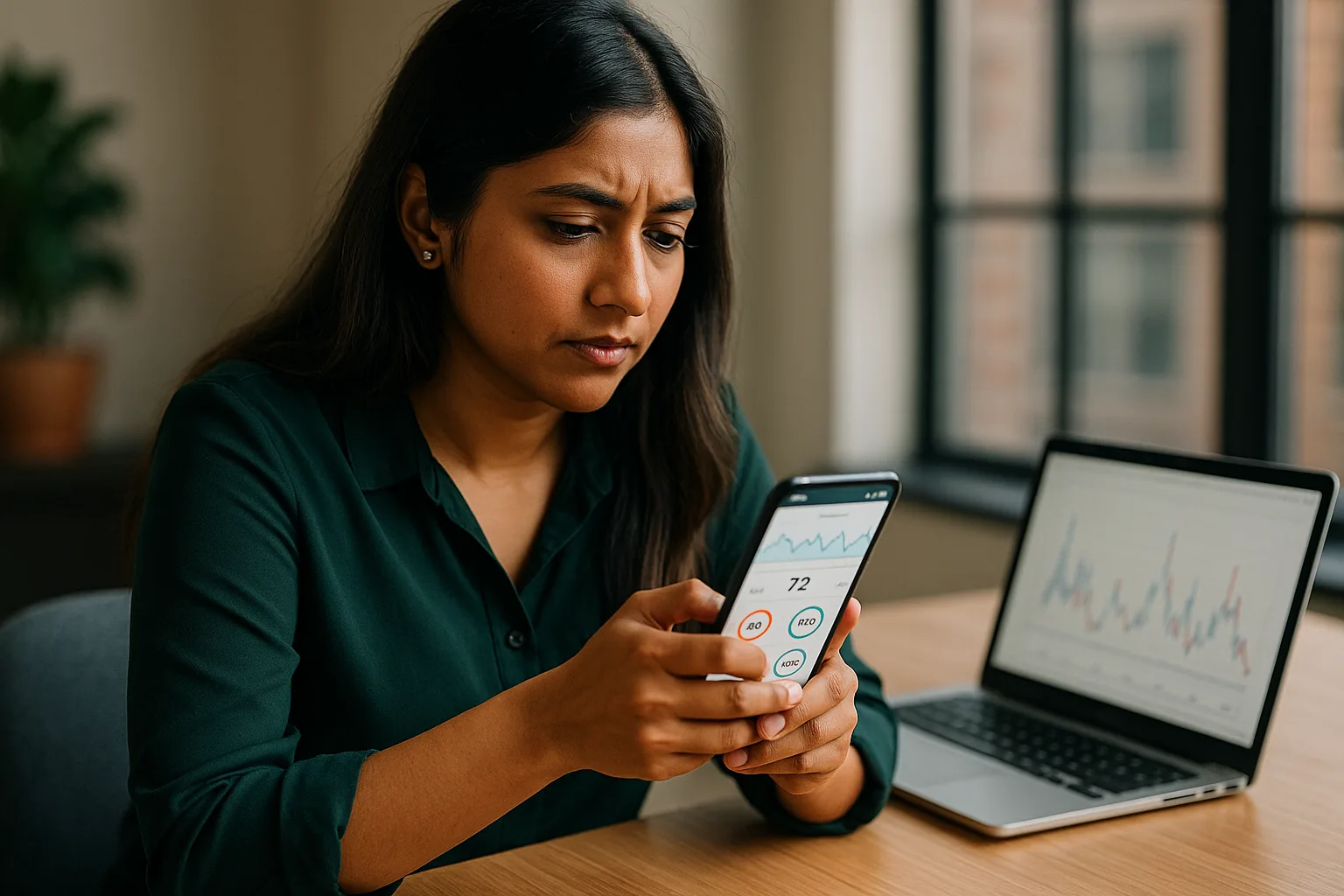
Yes, a person can try to game a readiness check-in. Anyone can put on a steady voice and say "I'm fine," and no tool can force honesty out of someone who has decided to hide. What Okaya can do is make faking hard to keep up and give people no reason to try. Each check-in is compared with the same person's own normal, across how they sound, what they say and how their expression moves. And the result is theirs: individual results stay private to the individual.
Safety and technical buyers ask this question early, and they should. A readiness check-in that people quietly game gives leaders false comfort, which is worse than no data at all.
What does "gaming" a check-in look like?
Gaming means shaping your answers so the result says what you want it to say. In practice it takes three forms.
| Form | What the person does | What Okaya can and cannot do |
|---|---|---|
| Acting fine | Speaks in a bright voice, gives short upbeat answers | Compares today with that person's own normal, so a change in pattern can still show. Cannot read intent. |
| Acting worse | Exaggerates to get time off or attention | Same comparison applies. Okaya does not decide who is telling the truth. |
| Someone else checks in | A colleague does the check-in on another person's account | The check-in belongs to the account that signed in. Okaya never identifies who you are from your face. There is no facial recognition. |
Okaya does not use faces to confirm identity. Identity comes from signing in, the same way it does for email or a timesheet.
Why do people fake their answers?
Most people who shade the truth on a check-in do it because they fear what an honest answer will cost them. Stigma and career worry are the usual reasons, and they are well documented in high-consequence work.
A study of U.S. Army and Marine Corps infantry units after duty in Iraq and Afghanistan found that, of those whose survey responses screened positive for a mental disorder, only 23% to 40% sought mental health care. Those who screened positive were twice as likely as the others to report concern about stigma and other barriers to care (Hoge et al., New England Journal of Medicine, 2004). The people with the most to report were the most worried about reporting it.
The same pressure shows up in any role where readiness links to the schedule, the next promotion or the right to fly or drive. If a person believes a low result goes into a file their supervisor reads, they will give a high one.
How does Okaya make faking hard to keep up?
Okaya compares each check-in with the same person's past check-ins, across many measures at once. A short act is easy. Holding the same act steady across voice, wording and expression, check-in after check-in, is much harder.
During a check-in you talk with Sanora for about 3 minutes. Okaya compares how you sound, what you say and how your expression moves today with your own earlier check-ins. It uses points from your face, not a video of you. The video never leaves the device.
Each measure gets its own range from that person's history, and today's value is placed within it. So the comparison asks whether today is unusual for you. A naturally quiet person is compared with their own quiet history. A person who is usually talkative and suddenly gives one-word answers looks different from their own pattern.
Can Okaya tell when someone is lying?
No. Okaya does not try to detect lies, and no check-in should claim to. Researchers who tested the popular idea that eye movements reveal lying found no support for it (Wiseman et al., PLOS ONE, 2012). Our essay on the limits of reading faces covers more of that research.
There is a limit worth stating plainly. If a person fakes every check-in from the first one, their "normal" is built from the act, and Okaya compares each new act with the old ones. A personal baseline shows change, and it cannot show what was hidden from the start. That is why the design effort goes into removing the reason to fake, more than into catching people.
What removes the reason to fake?
People answer honestly when an honest answer is safe. Okaya is built so that the person who checks in is the one who sees their own result.
- Individual results stay private to the individual.
- Leadership sees anonymized, aggregated unit-level readiness only.
- The video never leaves the device.
- Okaya never identifies who you are from your face. There is no facial recognition.
This changes the math for the person checking in. A supervisor cannot see one person's low day, so there is nothing to protect by inflating it. The only person a fake answer misleads is the one who gave it, and they lose the one thing the check-in gives them: an honest look at how today compares with their own normal.
Culture matters too, and software cannot supply it. If saying "not today" can end a career in a unit, people there will think hard before they answer honestly, whatever the privacy settings say. A check-in can make honesty cheap, and leaders decide whether it is also safe.
Key points
- A person can try to fake a check-in, and Okaya does not claim to detect lies.
- Okaya compares each check-in with that person's own earlier check-ins across voice, words and expression, so a steady act is hard to hold over time.
- Identity comes from sign-in. There is no facial recognition.
- Individual results stay private to the individual, and leadership sees anonymized, aggregated unit-level readiness only. That removes most of the reason to fake.
What should a buyer ask any readiness vendor?
Ask who sees an individual's result, how the tool decides what "normal" is, and whether it claims to detect lies. A vendor who promises to catch every faker is overselling. A vendor who cannot say who sees individual results is giving your people a reason to fake.