Industrial Safety in the Air and Everywhere
In short
Fatigue has led airline pilots to fall asleep in flight and contributed to a near-miss that the NTSB investigated. Sleep loss can impair performance as much as alcohol at a 0.05% blood alcohol level. A short, private readiness check-in before duty lets each crew member compare today with their own normal.
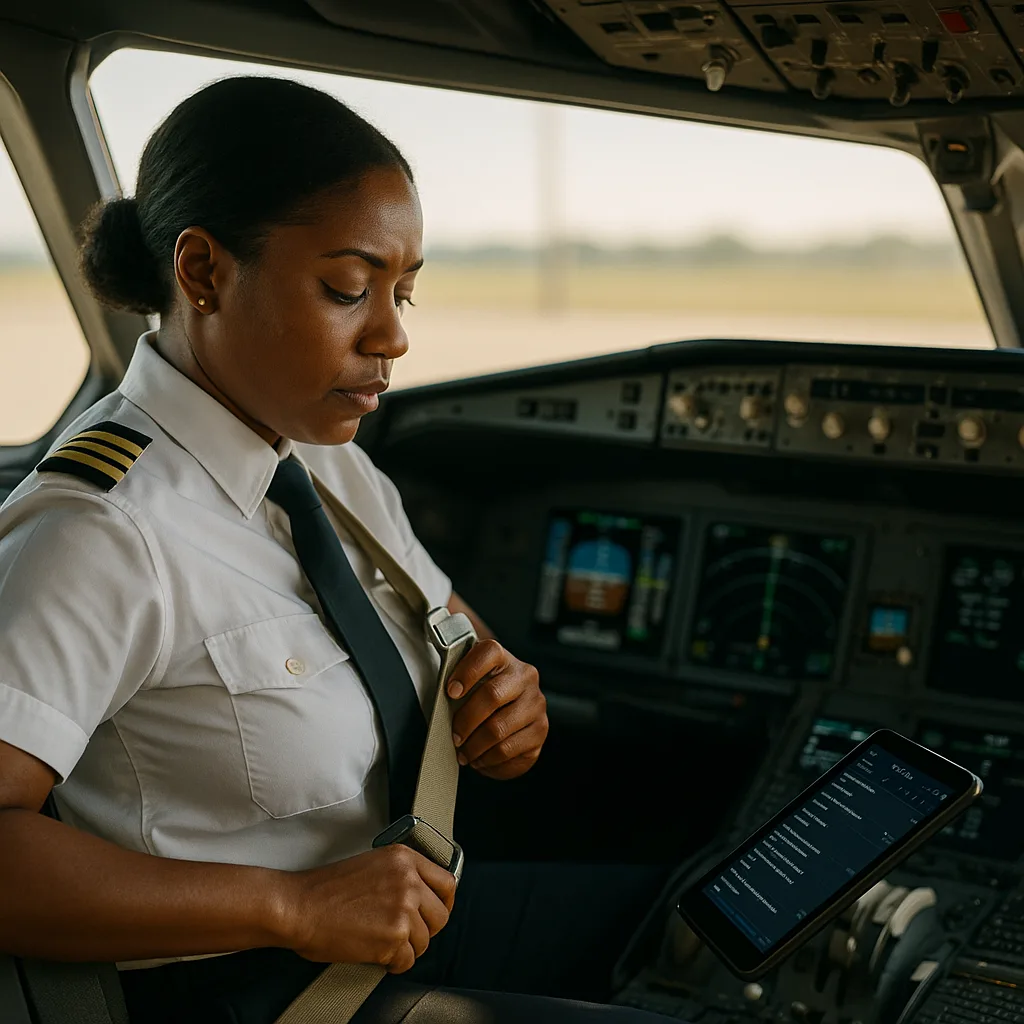
Fatigue is a documented cause of aviation incidents. U.S. investigators have found airline pilots asleep at the controls in cruise and fatigued crews lining up to land on a taxiway. Research shows that 17 to 19 hours without sleep can impair performance on some tasks as much as alcohol at a 0.05% blood alcohol level. Aircraft get a fuel check before every flight. Crews deserve an equally routine way to check whether they are ready, and to say so without risking their careers.
What happens when pilots are too tired to fly?
They can fall asleep, and they make worse decisions while awake. Two U.S. National Transportation Safety Board (NTSB) investigations show both.
On February 13, 2008, both pilots of go! flight 1002, a regional jet flying from Honolulu to Hilo, fell asleep in cruise. For about 18 minutes air traffic control tried to reach them while the airplane flew on autopilot. It passed 26 miles beyond Hilo before the crew woke up, turned back and landed safely with 40 passengers. The NTSB found the probable cause was both pilots "inadvertently falling asleep," with the captain's undiagnosed obstructive sleep apnea and the crew's run of early-morning start times as contributing factors (NTSB safety recommendation letter A-09-61 to -66).
The good outcome depended on luck. The NTSB noted the airplane happened to carry fuel for a return trip to Honolulu, so more than 1.5 hours of fuel remained when the pilots woke (same letter).
On July 7, 2017, an Air Canada crew landing at San Francisco at night lined up to land on a parallel taxiway, which the crew mistook for the runway. The NTSB listed "fatigue due to circadian disruption and length of continued wakefulness" among the contributing factors (NTSB investigation DCA17IA148).
How much does fatigue impair performance?
Enough to compare with alcohol. In a study of 39 people, most of them transport-industry workers, performance on some tests after 17 to 19 hours without sleep was equal to or worse than performance at a 0.05% blood alcohol level. Response speeds were up to 50% slower on some tests. After longer without sleep, performance reached the level seen at about 0.1% (Williamson and Feyer, Occupational and Environmental Medicine, 2000).
FAA rules bar a crew member from acting with an alcohol concentration of 0.04 or greater (14 CFR 91.17). A long day followed by a night departure can produce impairment past that line, and there is no breath test for it.
Why don't crews just say they are too tired?
Many fear what an honest answer will cost them: a lost trip, a hard conversation, a question about their record. When saying "I'm not ready" feels like a career risk, people keep quiet and fly.
Aviation already has a clear answer for the machine. Manufacturers publish an aircraft's operating limits, its required instruments and its fuel needs, and no crew takes off without them. The people flying it rarely get a fast, private way to check their own limits before a trip.
The scale makes the gap matter. The FAA's air traffic organization handles more than 44,000 flights a day in U.S. airspace (FAA, Air Traffic by the Numbers, FY2024 figures). Almost all of them are routine. The incidents above show what happens on the ones that are not.
How does a readiness check-in help?
A readiness check-in gives each crew member a quick, private look at how today compares with their own normal, before they start duty. The person sees their own result and can act on it.
During an Okaya check-in, you talk with Sanora for about 3 minutes. It compares how you sound, what you say and how your expression moves today with your own earlier check-ins. It uses points from your face, not a video of you. The video never leaves the device. Okaya never identifies who you are from your face. There is no facial recognition.
Privacy decides whether people use it honestly:
- Individual results stay private to the individual.
- Leadership sees anonymized, aggregated unit-level readiness only.
A commander learns whether the unit as a whole is running tired, without seeing any one person's day. A crew member learns whether today looks different from their own pattern, without that result reaching their supervisor.
Has the U.S. Air Force worked with Okaya?
Yes. The U.S. Air Force awarded Okaya SBIR Phase I and Phase II contracts; Phase II was completed with an active U.S. Air Force flying unit.
Does this apply outside aviation?
Yes. Any job where a tired person can hurt someone has the same problem: trucking, rail, firefighting, emergency dispatch, heavy industry. The alcohol comparison above came from transport workers and army personnel, not pilots. A check-in that takes about 3 minutes fits into a shift start in any of these settings.
Key points
- The NTSB has documented airline pilots falling asleep in cruise (go! flight 1002, 2008) and fatigue contributing to a near-miss (Air Canada, San Francisco, 2017).
- After 17 to 19 hours awake, performance on some tests matched or fell below performance at a 0.05% blood alcohol level.
- Crews hide fatigue when admitting it feels risky, so privacy is what makes a check-in work.
- The U.S. Air Force awarded Okaya SBIR Phase I and Phase II contracts; Phase II was completed with an active U.S. Air Force flying unit.