Firefighting Culture and the Cost of Silence
In short
Jeff Dill, who tracks firefighter and EMS suicides for the Firefighter Behavioral Health Alliance, says relationships are the number one reason. He says every department needs a full behavioral health program, and that any new tool must answer what happens after it flags a problem.
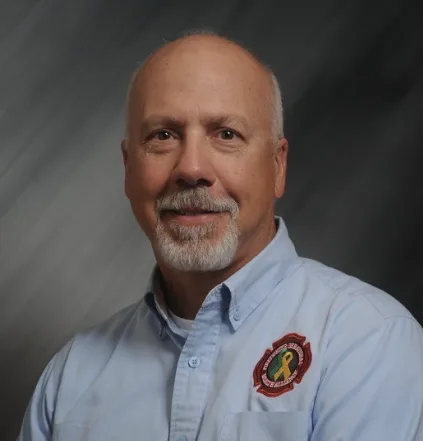
Interview with Jeff Dill, Founder of the Firefighter Behavioral Health Alliance and Behavioral Health Administrator at Las Vegas Fire & Rescue
Jeff Dill is a former battalion chief who became a licensed counselor and founded the Firefighter Behavioral Health Alliance, which validates firefighter and EMS suicides and connects first responders with counselors. He tells chiefs not to wait for a loss to build a program. Dill says relationships are the number one reason firefighters take their lives, and that every department needs a full behavioral health program, not an EAP alone.
Why did a battalion chief become a counselor and found FBHA?
Okaya: You went from battalion chief to founding FBHA and becoming a licensed counselor. What triggered that?
Dill: I was a battalion chief in the northwest suburbs of Chicago when Hurricane Katrina hit in 2005. We sent firefighters down, and when they came back, they showed me photos. They'd been picking up bodies in the streets and were struggling. They wanted to get help but at that time, clinicians didn't understand our world because we never let them in.
Having started in the fire service in 1990, I wanted to give back. I went back to school, earned my master's, became a licensed counselor, and in 2009 founded Counseling Services for Firefighters to train counselors and chaplains who truly understand us.
A year later, my wife and I created the Firefighter Behavioral Health Alliance to address depression, PTS, relationships, and addictions, and to start tracking firefighter and EMS suicides. We got a lot of pushback; people said, "PTS is a military issue," or "you're making up numbers" because there was such an adverse reaction but we stayed the course.
Sixteen years later, we've validated over 2,260 suicides and estimate we capture about 60% of actual cases. I've traveled more than a million miles speaking across the U.S. and Canada, including at the Pentagon. FBHA has been mentioned in Congress, we host family retreats, and we connect first responders with counselors, all free of charge.
Today, I serve as Behavioral Health Administrator for Las Vegas Fire & Rescue since 2021. It's tough work. I've lost about 35 brothers and sisters to suicide, but we've saved many lives, too.
Are there enough counselors who understand the fire service?
Okaya: Are there now more counselors who truly understand the fire service?
Dill: The two greatest developments I've seen since 2010 are peer support teams and the number of clinicians who now want to work with first responders. There are a lot more out there now, some who run their own practices and only work with us. But even with that growth, we still need many more.
It's stressful work. I know both sides. I've been in the fire service for 35 years, and I've been a clinician about 17. Job burnout for counselors who work with first responders comes much faster than when working with the general public. It takes a toll. So yes, we've made progress, but we're far from done.
How can chiefs tell whether their behavioral health efforts are working?
Okaya: How can chiefs measure whether their behavioral health efforts are working?
Dill: That's one of the hardest questions. There are still so many pockets in the U.S. where chiefs think, "We haven't had a suicide, so we're fine" and by the time I talk to them, it's often too late.
We're proactive on everything else (hose line advancement, search and rescue, fireground techniques) but not behavioral health.
And the reality is, when budget cuts come, behavioral health is usually the first thing to go. "We need our rescues, we need our hoses, we'll cut that next year". That's dangerous thinking. You can have the best equipment in the world, but if your people aren't ready to operate it (mentally, emotionally), it doesn't matter.
The FBHA doesn't get a lot of funding and I've even had manufacturers tell me: "There's not much ROI in behavioral health." I tell them: "You're saving lives when you invest in people. These are the same chiefs you're trying to sell engines and gear to, and they're the ones taking their lives".
Money is always tight, but that can't be the excuse.
What is moral injury, and how does it differ from PTSD?
Okaya: How does moral injury differ from PTSD, and why does it matter?
Dill: Our data show that the number one reason firefighters take their lives is relationships, by far. PTSD is trauma-based and fear-based, but moral injury hits your emotions. It's about rejection, betrayal, guilt, anger, jealousy, things that cut to the core of who we are as people. We're human beings first, firefighters second.
In 2010, I coined the phrase "cultural brainwashing". We put the uniform on, and we're expected to act a certain way. Show no weakness. Always be in control.
No one's an expert in this field. I've been doing it for 16 years, and I'm still learning. An expert solves a problem and moves on. We have a big problem and have had this problem since the beginning of time: we're dealing with people, and that's always complex.
Some of the older firefighters are now asking for help and encouraging the younger ones to do the same. That's a big shift.
But younger firefighters face their own challenges. Many lack interpersonal or social skills because they grew up on screens and phones. Communication, especially about how you feel, doesn't come naturally.
I always tell people to do an internal size-up every day. Ask yourself two questions: Why am I acting this way? Why am I feeling this way? Listen to your body: if you're losing sleep, getting angry, or turning to substances, it's trying to tell you something. And listen to others; they often see what you don't.
What does a complete behavioral health program look like in a fire department?
Okaya: What does a complete behavioral health program look like in a fire department?
Dill: Every department should have one, and it's more than an EAP or peer support. It should include annual training, guidelines, policies, and retirement support. When firefighters retire, many struggle because they lose identity and structure so we track them too.
For us it is a 12-point behavioral health program and I've instituted it here in Las Vegas, from prevention to post-care. It includes a QR code linking to all our resources: peer support, clinicians, inpatient and outpatient care, even a book library. Firefighters can access it privately from home.
We have about 40 clinicians in our directory they can call directly, 75 peer support team members (from battalion chiefs to new firefighters) and 15 or 16 chaplains. Recently, we added four firefighter wives to the peer support team so spouses can reach out to someone who understands.
Firefighters can also seek help confidentially. We can line up someone for inpatient treatment without the chiefs or others knowing, ensuring people can take FMLA or vacation time. Privacy is key.
When I came in 2021, our department's surrounding departments like Clark County and Henderson, North Las Vegas weren't working together. Now we work closely with them, and even the Creech Air Force Base. Everyone supports each other.
Our peer support team also helps in the community, for example, if a manufacturer loses an employee in an accident, we offer our services. The coroner's office too. It's about helping wherever we can. Our people just want to do good.
Where does AI fit into firefighter readiness and peer support?
Okaya: Where does AI fit into firefighter readiness and peer support?
Dill: I like AI, and we're already testing it. We're using a system that sends peer support scenarios to a small group of us for training. It's useful.
AI absolutely has a place, especially for training. Peer support members can't just sit around waiting for a call. They need to keep their skills sharp, and AI can help with that.
The question is, what happens after detection? If AI detects that I'm exhausted or stressed, what's next? Is the department liable if they know and don't act? What if someone refuses help because they fear losing their job?
That's where the challenges are. For police officers, the fear is real: if AI says they're struggling, they might lose their weapon or position.
So, departments have to go step by step. Be transparent. Decide what [the check-in looks at], what it recommends, and what actions follow.
The challenge is real, but the value is there. The AI isn't biased; it picks up on aspects of personality, [expression], tone, and behavior to help, but it doesn't judge. It's just trying to help. Bridging that gap between the AI's insight and human decision-making is going to be the difficult part.
I'm interested to see where it goes.
What does Dill want chiefs to remember about the numbers?
Dill: "Whenever someone uses our data, I tell them: these aren't numbers. They're faces, names, and families left behind. It's easy to get lost in the statistics, but every number represents a life."
Dill: "We've only been talking about behavioral health in the fire service since around 2010. The fire service has existed since Ben Franklin. We've come a long way, but we still have a long way to go."
Key points
- Dill says the number one reason firefighters take their lives is relationships, by far.
- He says chiefs who reason "we haven't had a suicide, so we're fine" often hear the truth too late.
- He says behavioral health is usually the first item cut when budgets tighten.
- A complete program covers more than an EAP or peer support: annual training, guidelines, policies and retirement support.
- Dill suggests an internal size-up each day: Why am I acting this way? Why am I feeling this way?
- On AI, he asks what happens after a tool flags someone, and says departments should decide what the check-in looks at, what it recommends and what actions follow.
Okaya is a short, private check-in. You talk with Sanora for about 3 minutes, and it compares how you sound, what you say and how your expression moves today with your own earlier check-ins. Individual results stay private to the individual. Leadership sees anonymized, aggregated unit-level readiness only.
Learn more about the Firefighter Behavioral Health Alliance.