The Officer Communication Gap: When Crews Confide But Chiefs Don't Know
In short
Fire officers hear when crew members struggle, but that knowledge often stops at the officer level and chiefs learn late. Marie Balak says officers need a written guide to steps and resources, and leaders who are open about asking for help.
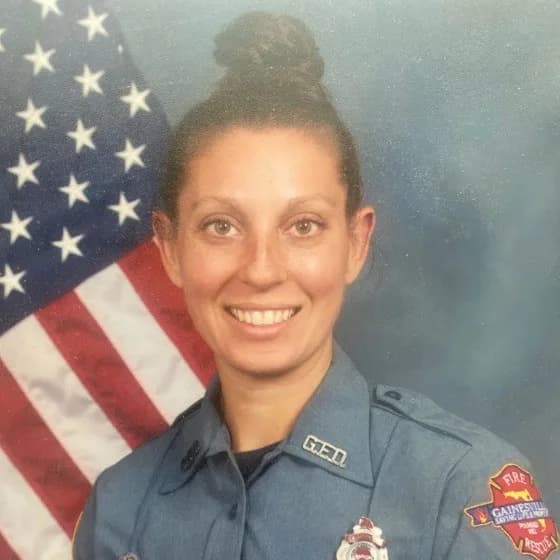
Interview with Marie Balak, Firefighter and Peer Support Advocate at Gainesville Fire Rescue
Marie Balak is a firefighter on Gainesville Fire Rescue's Human Relations Committee and peer support team, and she holds a union role. She tells chiefs that company officers hear when a crew member is struggling, but most do not know what to do with it, so the chief learns late. A written guide for officers and visible openness from leaders close that gap.
How can a fire department help officers act on what their crews tell them?
Okaya: How did you get involved in peer support work?
Balak: I got involved on the Union side through the Human Relations Committee, so I did a lot with our peer support team and CISM: helped mediate internal conflicts and supported people process things after critical incidents.
In the last couple of years, we've really started to build our support program by identifying what stressors impact people's jobs, like deaths in the family, bringing up a child, divorce... and what we could do as a department to support them through big life moments.
A lot of the disconnect we observed was between fire officers and upper management. Officers are close and tight-knit with their crews. They know when something's changing, and they have that open relationship where crew members confide in them. But fire officers didn't really know how to handle that, who to go to or what support was available.
We created a guide that could be given to fire officers with the steps they could take and the resources available. Whether it's a meal train for a loss or a new addition to the family. We wanted to outline these things. Having pretty unique personalities in the fire service impacts mental health and our ability to ask for help, seek help or realize that there might be something going on that we don't want to admit to ourselves.
We also tried modeling a family support group, because task forces would go out for hurricanes and regional, state, and even national responses. These always cause communication troubles because these days are so long and timelines are changing, so we wanted to be able to support families at home. We modeled it off of the military and the FRG, which I believe is a change in culture and mindset that is needed. But those systems aren't exactly in place in the fire service yet.
How does a lieutenant push concerns up without losing the crew's trust?
Okaya: As someone working between the union and management, how do you balance supporting your crew while also communicating with upper management?
Balak: Each level in the fire service is unique and has its own challenges. That lieutenant and fire officer role is often the most challenging because you have to find the balance between pushing things up and advocating for the people that you're leading, while also maintaining a bond with them.
It comes down a lot to respect, having the people that you're leading have a high level of respect for you. And it's not the white shirt. It's you as a person, knowing that you'll go to bat for them, that they can trust you, and that you're not just going to bring anything and everything up to management.
Something that Gainesville has been really good at is creating that culture of family. There's a lot of events and gatherings that happen outside of our everyday work to foster building those relationships and that trust.
But the reality is that some people may not always be comfortable or have the best bond within their crews, and being able to support and provide them with an outlet when they do need it is important. One of the programs that I restarted was the probationary mentorship program, pairing individuals with mentors based on their personalities, interests and lifestyles, fostering these bonds so that if they had trouble navigating something, they always had somebody that they could go to.
Keeping crews engaged with mental health has a lot to do with leadership and being open about these things because now what you would traditionally see as the hardest individuals are open to talking about going and having those conversations.
Culture shifts are slow. They take consistency and they take some of those key personnel and leaders to be open and continue to promote that change. It's about walking the walk and not just talking the talk.
How should departments train the generation of recruits they actually hire?
Okaya: Do you see generational differences in how firefighters approach the job?
Balak: There's definitely a generational difference that I think people may be struggling with in the fire service. We're trying to sustain the culture of taking pride in what we do, taking pride in our equipment and uniforms while also acknowledging that the way that we might teach or explain something is different now. It's a change in generations and you can't talk to people the same way. That's our culture now and that's society in general.
Changing our tools also matters. Young recruits are very media oriented so it can be through showing videos or sitting down at the computer and talking through things as opposed to how it's been traditionally done.
Even things as simple as acknowledging the fact that people who come in may not have the same life skills: some may not know how to chop vegetables or how to be financially responsible. As simple as it sounds, you're teaching them not just how to do the job and interact, but actually life skills so they can take care of themselves. They could be right out of high school, be 18 and never having had that big of a paycheck. Teaching them about retirement, it's unique.
How do new firefighters process what civilians cannot see?
Okaya: How do you help new firefighters process the gap between their expectations and the reality of the job?
Balak: The fire service is glorified and I don't necessarily think that it should change. You still get to help people in unique and special ways that not everyone is called to do. We intervene on many incidents that are not traditionally an emergency to us but still an emergency to them, and we also intervene on really difficult scenes.
I held a talk during orientation where we talked about this and how to navigate it. You may not know, especially if you've never been in the fire service or if you're 18 coming in, how to process this. I just drew on my own learning process, knowing that everyone's going to be different.
People see us as an everyday person and they see us as a firefighter, but in many instances we're interacting as if nothing happened when we just saw something that would traditionally be very traumatic to a lot of other people.
One of the things that Gainesville also gained about five years ago is a therapist who was more tailored to our field. We moved away from the city's therapy program, the union sought this person out and hired them. The feedback has been really good.
A lot more people have opened up about going and speaking with her due to life events, not necessarily on-the-road events. But I think that from a mental health perspective, those life events cause the on-the-road events to be more significant. The mental health side of things is kind of the problem of what came first, the chicken or the egg.
How do you justify support programs when success looks like nothing happened?
Okaya: How do you justify support programs when positive results can make them seem unnecessary?
Balak: That's always a challenge. There are some grants out there that can definitely help promote it and they can hear it from the firefighters. But there just needs to be more science and documentation to justify funding decisions, the need for programs and for mental health to be taken more seriously, which is unfortunate.
The amount of suicides and everything like that should be enough but I am not sure they fully understand the problem. Most of all as our call load has increased, what we're dealing with has increased, our scope as the fire department has increased. And all of that adds extra stress onto the people who are serving the community.
Having these conversations and chiefs that can put it in that perspective, not just show numbers. If they have somebody who is willing to step up and say: "Hey, this helped me", and talk at commission meetings about it or justify that cost, then more power to them. It's challenging because it takes a lot of guts to do that.
Part of the stigma exists about asking for help because our processes and procedures and support systems have, unfortunately, oftentimes been punitive. When you look at substance abuse and that realm of mental and physical health, they can sometimes be punitive. And so people don't want to say that they have a problem. People don't want to go and get help because they're fearful of losing their jobs.
What does Balak say about leadership and funding?
Balak: "These are my people, these are my brothers and sisters. Anything I can do to support them I do because there is a need for it. And hopefully, after however much time, the department and city or county will notice and acknowledge the value in establishing those programs and then fund it. It almost becomes a place where the union and the city are better off collaborating on those things than any other topic."
Balak: "I think that has to come from the top down, but also from the bottom up. Any movement, whether you figure out one path works best or it needs to be changed or whatever else, as long as you're moving it forward, that's the most important thing for everyone."
Key points
- Officers know when a crew member's situation is changing, and crew members confide in them. Officers often do not know whom to go to or what support exists.
- Gainesville built a guide that gives fire officers steps they can take and the resources available.
- Officers keep a crew's trust when they advocate for the crew and do not pass everything up to management.
- Probationary mentorship, pairing recruits with mentors by personality, interests and lifestyle, gives new firefighters someone to go to.
- Balak says fear of losing a job keeps people from asking for help, and that support systems have often been punitive.
- Culture shifts are slow. Balak says they need consistent leaders who walk the walk.
Okaya is a short, private check-in. You talk with Sanora for about 3 minutes, and it compares how you sound, what you say and how your expression moves today with your own earlier check-ins. Individual results stay private to the individual. Leadership sees anonymized, aggregated unit-level readiness only. It sits alongside peer support and the resources a department already has.